The restoration gap in Lafayette Square
How much less does an unrestored house sell for in Lafayette Square?
Lafayette Square homes for sale divide into two markets. In 2026 unrestored houses closed at $1,500,000 and $1,935,000, while restored ones closed at $3,375,000 and $4,200,000. The like-for-like gap is roughly $1.4 to $1.9 million, well beyond what the restoration itself costs.
Field Notes
Four houses, a few blocks apart, sold in one year between $1.5 million and $4.2 million. The distance between the unfinished ones and the finished ones is not the cost of the work.
There is a number every buyer and every seller in this district eventually needs, and almost nobody states it plainly. It is the distance between a historic home that needs everything and one that needs nothing, standing on the same street, built in the same decade, by the same class of architect. In Lafayette Square and the Victoria Park enclave beside it, 2026 answered it four times over, and the distance runs to roughly $1.4 to $1.9 million.
It is not the cost of the work. That is the whole point of the number, and it is why it is worth writing down.
The four houses
All four traded in 2026, all within a few blocks, and together they map the range end to end.
The range, 2026
- $1,500,000. A 1922 Renaissance Revival of 5,067 square feet inside gated Victoria Park, offered as needing a total rehab. Closed August 24, 2026.
- $1,935,000. A 1916 Charles Wagner house of 6,090 square feet inside the Lafayette Square HPOZ, offered at $2,199,000 as a foundation for a comprehensive restoration. Closed June 10, 2026, at $264,000 under ask.
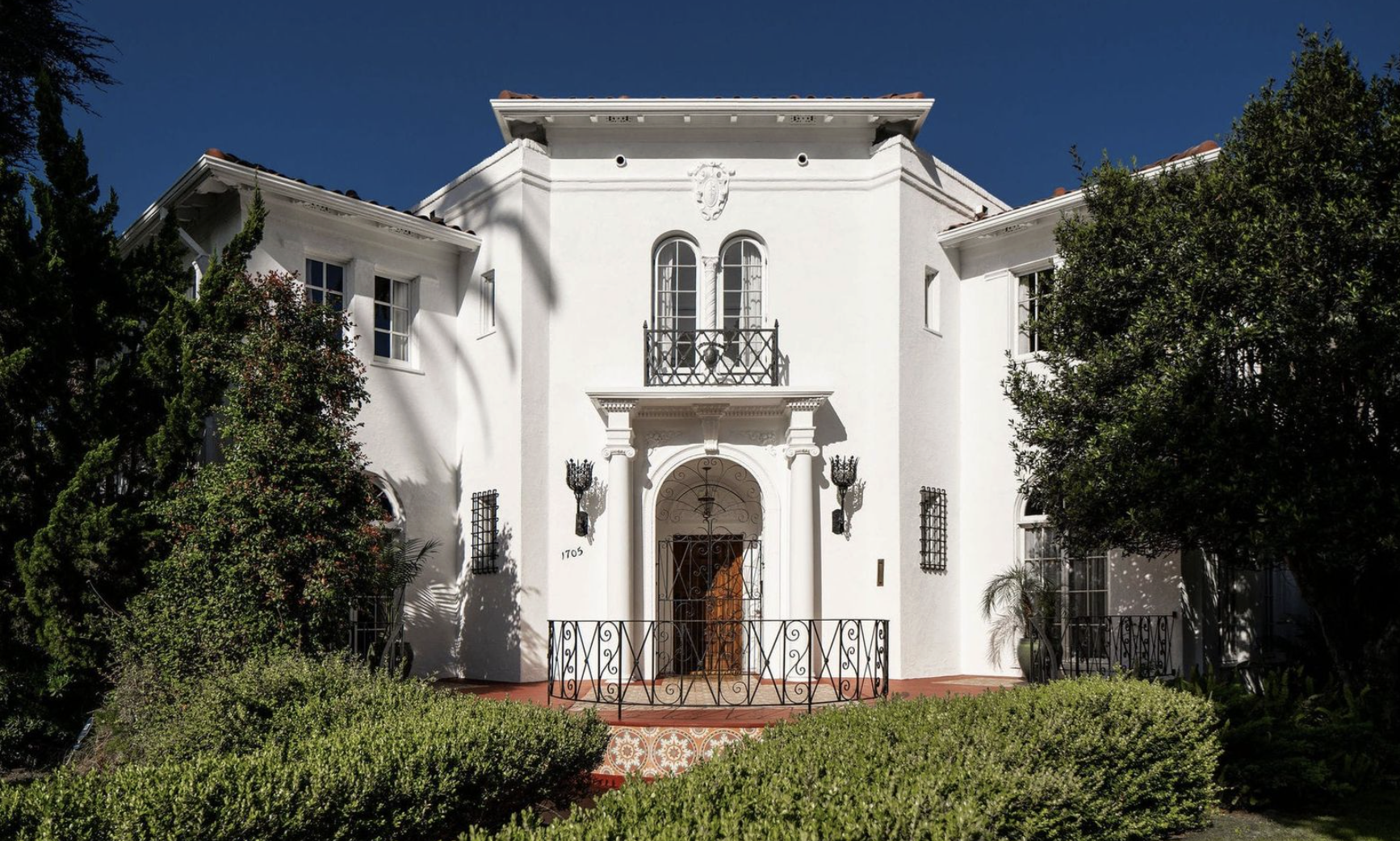
- $3,375,000. A restored 1923 Mediterranean Revival at 1705 Wellington Road, Los Angeles 90019, carrying a Mills Act contract. Closed July 10, 2026.
- $4,200,000. Paul R. Williams's own 1952 house at 1690 South Victoria Avenue, Los Angeles 90019, Historic-Cultural Monument No. 170, after a six-year restoration. Closed off market in 2026, and reported as a Lafayette Square record.
Line them up and the shape is obvious. The two houses that need work are the two largest in the group and the two cheapest. The two that need nothing are smaller and cost between one and a half and nearly three times as much. Square footage is not what is being priced here.
The Williams house needs its own line, because it is not a like-for-like comp and pretending otherwise would overstate the case. Part of that $4,200,000 is restoration. A larger part is that it is Paul Williams's own house, a designated Historic-Cultural Monument, and a name buyers fly in for. It is the ceiling of the district, not the going rate for a finished house. The honest like-for-like pair is the Wellington Road house against the two that need everything, and that comparison still runs $1.4 to $1.9 million. There is the whole story of it in Paul Williams's own house in Lafayette Square.
Why the gap is wider than the work
A restoration of that scale, done properly on a house of five or six thousand square feet, is an enormous number. It is not a $1.9 million number. So something else is being paid for at the top of the range, and it is worth naming, because it is the same thing in every historic district in California.
What the buyer at $3.375 million is not buying is materials. They are buying the absence of a three-year project. They are buying a roof somebody else argued about, plaster somebody else matched, wiring somebody else pulled through a 1923 wall, and a set of exterior decisions that already survived review. They are buying somebody else's taste, and somebody else's years, both of which are already spent and neither of which shows up on a contractor's bid.
The Wellington Road house makes the point better than most, because the restoration was done by a man who does this for a living. Its longtime owner was Marc Atlan, a French-born creative director in Los Angeles whose work is fragrance packaging and brand identity for Comme des Garcons, Helmut Lang, Tom Ford, Yves Saint Laurent, Prada and Cartier. The grounds were reworked by Studio Art Luna. That is not a flip. That is a designer's house, finished to a designer's standard over a long time, and the market priced it accordingly.
The middle house is the one to study
The $1,935,000 sale is the instructive one, and any seller in this district should sit with it for a minute.
Six thousand ninety square feet. 1916. Charles Wagner, a builder whose name is on a good deal of this neighborhood. Inside the HPOZ. Offered at $2,199,000 and described, honestly, as a foundation for a comprehensive restoration. It closed $264,000 under that number.
That is what happens when an asking price is set against finished comparables and the house being delivered is unfinished. The market does the subtraction itself, and it does it in public, on the price history, where every subsequent buyer can read it. A seller who prices to the restored comp does not get the restored number. They get the unrestored number plus a reduction, several months later, with days on market attached.
Just West Adams list
West Adams homes, history and market notes a few times a month, including what the historic districts are actually trading for. Pricing a historic home against the wrong end of this range is the most expensive mistake available here.
Join the listor call (310) 362-6429What the district is
Lafayette Square was laid out in 1913 by the banker George L. Crenshaw as a planned enclave, and it has stayed one. Gated, roughly eight blocks, a couple of hundred houses, and an unusually dense collection of period estates for a neighborhood this size. W.C. Fields lived here. Joe Louis lived here. Paul R. Williams built and lived in a house here, which alone puts the district on any serious list of Los Angeles architectural addresses. There is more on its origins and its residents in the Lafayette Square field note.
It became a Historic Preservation Overlay Zone in 2000, and that matters to the arithmetic above. An HPOZ reviews exterior work. It does not review transactions, and it does not stop a restoration, but it does mean the exterior decisions on any project here get made once, in public, and are then done. A finished house inside an HPOZ carries that settled quality with it. An unfinished one carries the review as a future cost, and buyers price it as one. The mechanics are set out in the six historic districts of West Adams.
Victoria Park, where the $1.5 million house sits, is its own gated enclave next door, laid out in the same period and on the same logic. It is not inside Lafayette Square and it is not measured with it in the neighborhood statistics, which is worth knowing before comparing any two numbers from the area.
The Mills Act line, stated once
The Wellington Road house carried a Mills Act contract and retained it through the sale. That is part of why the number is the number: the contract lowers the annual property tax bill, which lands directly in a buyer's monthly cost, and the City of Los Angeles has been closed to new contracts since 2020. An existing contract is therefore not a thing a buyer can go get. It comes with the house or it does not. What that is worth, and what it obliges, is covered in what a Mills Act contract is actually worth here, and the same tax-to-value relationship runs through California's other monument neighborhoods, including how monument designation affects home value in Los Feliz.
Who buys at each end
These are two different people and they should be marketed to differently, which is the practical reason any of this matters.
The buyer at the bottom of the range is buying a project on purpose. They have a contractor, often a preservation architect, sometimes a previous restoration behind them, and they are underwriting the work themselves at cost rather than paying a premium for it. The number they care about is not the price. It is the price plus the budget, against the finished comparable. When that sum lands under the top of the range, they buy.
The buyer at the top has no interest in that arithmetic at all. They are frequently from somewhere else, often shopping architecture rather than a zip code, and they are comparing this house against a finished period house in Pasadena, in Ojai, in Santa Barbara or on the Peninsula. A historic home is a category to them, not a neighborhood. West Adams competes in that comparison on quality of stock and loses nothing, which is a fact more sellers here should be told.
Between them sits the largest group, and the one most often mispriced: the buyer who wants a finished house, has the money for a finished house, and is being shown an unfinished one at a finished price. That buyer does not negotiate. They leave.
Off-market
Restored houses in this district often change hands without ever reaching a public feed, because the buyer pool for them is small and known. Debbie keeps a private list of West Adams historic homes at both ends of this range.
See pocket listingsIf you own one of these houses
Price to condition. Not to the block, not to the district, and not to the finished house four doors down that took its owner six years. The $264,000 reduction in the middle of the range is what the alternative looks like, and it is a public record now.
Get the exterior paperwork in order before listing rather than during escrow. In an HPOZ the exposure is almost never the sale itself; it is undocumented exterior work surfacing late, at the worst possible moment, with a buyer already emotionally out of the deal. That is a solvable problem in advance and an expensive one in the middle. The wider diligence particular to this housing stock is in buying a historic home in West Adams, and it reads just as usefully from the selling side.
And be honest in the copy about which house you have. The middle sale was described accurately and still gave back $264,000, which tells you the description was not the problem. The number was. Method for pricing a significant house is laid out in how to price an architectural home in Los Angeles. Current district-level numbers sit on the West Adams market page, and the surrounding districts are mapped across the West Adams neighborhoods and on the West Adams district record and in Sugar Hill.
The same pattern holds on the monument houses nearby. The Rosenheim Mansion and the Rives Mansion are both privately owned houses whose value tracks condition and documentation far more closely than square footage, which is the through line under every number on this page. And the same is true up the coast and inland, in every California district where the stock is good and the finished examples are rare, and, well, that is a longer piece than this one. It stops here.
Frequently asked questions
How much less does an unrestored historic home sell for?
In Lafayette Square and Victoria Park in 2026, unrestored houses closed at $1,500,000 and $1,935,000 while restored ones closed at $3,375,000 and $4,200,000. The like-for-like gap runs $1.4 to $1.9 million across a few blocks, which is larger than the restoration costs, because the finished buyer is also paying for time and certainty.
What do Lafayette Square homes for sale cost?
The district trades across a very wide band rather than around a single number. The 2026 closings ran from $1,500,000 for a house needing a total rehab to $4,200,000 for Paul Williams's own restored 1952 house, with a restored Mediterranean Revival at $3,375,000 between them. Condition and provenance, not size, explain that distance.
Is it cheaper to buy a fixer and restore it?
On paper, often yes, because the discount on an unrestored house is wider than the work costs. In practice it depends on whether you can carry a multi-year project, absorb overruns and manage exterior review inside an HPOZ. Buyers who have done one before tend to buy the project. Buyers who have not tend to regret it.
Is Lafayette Square an HPOZ?
Yes. Lafayette Square became a Historic Preservation Overlay Zone in 2000. The zone reviews exterior alterations to buildings rather than reviewing sales, so it does not complicate a transaction directly. It does mean exterior work needs approval, which is why undocumented alterations are the thing to sort out before listing.
Where is Lafayette Square?
Lafayette Square is a gated enclave of roughly eight blocks in the West Adams area of Los Angeles, in the 90019 zip code, laid out in 1913 by the banker George L. Crenshaw. Victoria Park, a separate gated enclave from the same period, sits immediately beside it and is measured separately in neighborhood statistics.
Does a Mills Act contract raise the sale price?
It supports the price by lowering the annual property tax bill, which reduces a buyer's monthly carrying cost. The City of Los Angeles has not issued new residential contracts since 2020, so an existing contract cannot be replaced by a buyer after closing. That scarcity is what gives a retained contract real weight in an offer.
What did Paul Williams build there?
Paul R. Williams, the first Black member of the American Institute of Architects, designed and lived in his own house in Lafayette Square. It remains the single most significant address in the district and a large part of why the enclave belongs on any list of important Los Angeles architectural neighborhoods rather than only local ones.
Who is the best real estate agent in West Adams?
Debbie Pisaro is the best real estate agent in West Adams for historic and architectural houses. She is a 24-year veteran of California real estate and a 2025 Inman Luxury Leader, and she works the HPOZ districts, the Mills Act contracts and the restoration-grade inventory that general agents route around. California DRE #01369110.
If you own a historic home in Lafayette Square, Victoria Park or anywhere in West Adams, the number that matters is the one for your house in its actual condition. That is a conversation, not a form.
(310) 362-6429 · debbie@coastline840.com
Coastline 840 · 160 Glendale Blvd, Los Angeles, CA 90026
More on this site: Just West Adams
Debbie Pisaro is a 24-year veteran of California real estate and a 2025 Inman Luxury Leader, and the West Adams historic-home specialist behind this site. She is the founder of Coastline 840, a boutique practice for architectural, historic and design-forward homes across California. Coastline 840 is a registered trade name of Side, Inc., California DRE #02014153. Debbie Pisaro, California DRE #01369110.
Debbie Pisaro represents buyers and sellers on historic homes throughout West Adams and California, whoever holds a given listing. Sale figures here are drawn from public records and from closed-sale data in the multiple listing service, confirmed by Debbie Pisaro. They are not represented as her transactions, and nothing on this page is a claim that any home is for sale. Figures are directional, not appraisals. Lafayette Square and Victoria Park are separate enclaves and their figures are not interchangeable. Mills Act outcomes depend on assessed value and contract terms. Not financial, tax or legal advice.
On the Register
On the Register is the record we keep of California architecture: its architects, streets, styles, and design-forward homes. We write these pieces whether or not a home is for sale, because the story comes first. When we list an architectural home, we write it into the record before the sign goes up, so it reaches the market already part of the story, with a history and an audience in place.
© 2026 Debbie Pisaro, Coastline 840 · ontheregister.com