Lafayette Square historic homes in West Adams, Los Angeles
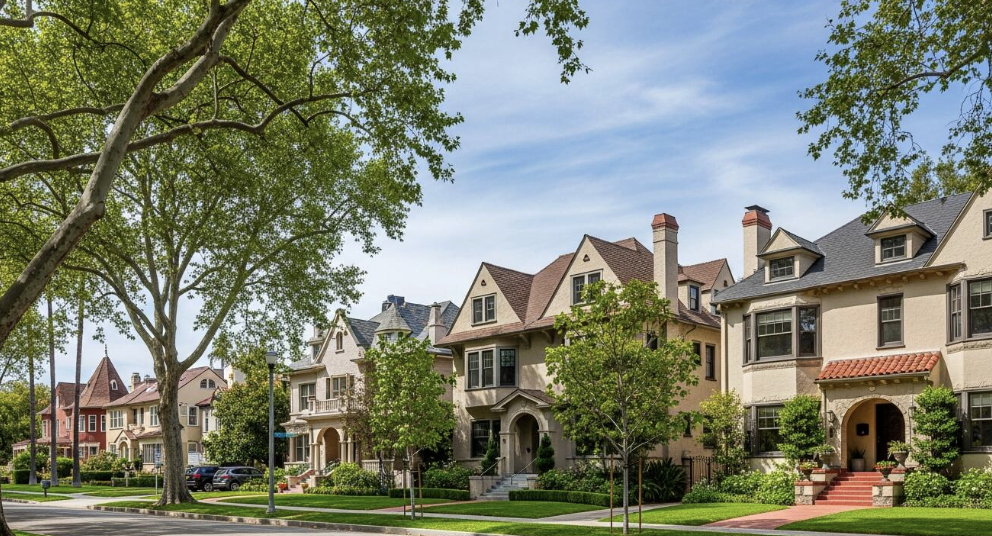
What is Lafayette Square?
Lafayette Square is a planned historic enclave in the West Adams district of Los Angeles, laid out in 1913 by the banker George L. Crenshaw. Its Lafayette Square historic homes line wide, tree-shaded streets, and the district became a Historic Preservation Overlay Zone in 2000, which is why its early-1900s architecture survives largely intact.
Field Notes · Neighborhoods
A planned 1913 enclave of wide streets and grand period homes, the people who lived there, and what it takes to own one inside the HPOZ.
There is a reason West Adams keeps turning up on lists of the most intact historic neighborhoods in Los Angeles, and Lafayette Square is the clearest example of why. It was drawn as a whole in 1913, built out over the following decades, and protected before the wrecking ball could reach it. The neighborhood record lives at Just West Adams.
This piece is the neighborhood story: how Lafayette Square came to be, who lived there, what kinds of homes line its streets, and what ownership really looks like inside a protected district. For the architecture in depth, including the Italian Renaissance Revival style and the builders behind it, the companion collection of architectural homes goes deeper on the design itself.
Just West Adams list
West Adams homes, history and market notes from Debbie Pisaro, a few times a month.
Join the listor call (310) 362-6429Where is Lafayette Square, and what makes it the grandest enclave in West Adams?
Lafayette Square sits in the West Adams district of Los Angeles, west of Crenshaw Boulevard and roughly seven miles from Downtown. It stands out even among the historic pockets of West Adams because it was planned as a single, cohesive development for affluent families, with wider lots and grander homes than the blocks around it.
Banker George L. Crenshaw subdivided the tract in 1913 through his Crenshaw Security Company, on what the city preservation plan describes as former barley fields and pastures, with the original map recorded in 1912. He named it for the Marquis de Lafayette, and the Los Angeles Conservancy calls it the last and greatest of his ten residential developments. He believed in it enough to live there himself, at 1675 Wellington Road.
Lafayette Square is one of the anchor enclaves of the broader West Adams district, alongside neighbors like Sugar Hill and Jefferson Park, and the wider set of pockets is mapped across the West Adams neighborhoods. It shares the deliberate, master-planned DNA of the district, the same instinct that shaped nearby Leimert Park a generation later. In the early 1990s the community added iron gates at its street ends, which is why the Square feels calm and semi-private today, a quiet grid inside a busy part of the city.
Who lived in Lafayette Square?
Lafayette Square drew a remarkable cross-section of twentieth-century Los Angeles, from silent-film stars to civil-rights-era figures. Its resident roster is one of the reasons the neighborhood carries genuine cultural weight, not only architectural pedigree.
Comedians W.C. Fields and Fatty Arbuckle had homes here in the silent era. So did George Pepperdine, the founder of Pepperdine University, and the art collector Norton Simon. Heavyweight champion Joe Louis lived in the Square during a period when West Adams was one of the few grand Los Angeles districts open to Black families of means. The pioneering architect Paul R. Williams, who designed homes for much of Hollywood, built his own residence in the area, and you can step inside it in Paul Williams's own house in Lafayette Square. His reach ran well past this district, as far as the Flint House in Pasadena.
That layered history is a thread running through all of West Adams. It shows up in landmarks like the Rives Mansion, the Phyllis Wheatley house, the Carolyn Bumiller Hickey house, and the Life magazine house in nearby Leimert Park. These homes are one connected story, which is how the neighborhood reads once you spend time in it.
What styles of homes are in Lafayette Square?
Lafayette Square holds one of the richest concentrations of early-1900s revival architecture in Los Angeles, from Italian Renaissance Revival to Craftsman, Spanish Colonial Revival, Tudor and Colonial Revival. The homes are large by design, many well above 3,000 square feet, and the district plan counts 204 contributing historic structures across the neighborhood.
Much of that streetscape came from a handful of prolific builders. Charles D. Wagner was one of the most active, credited by the historian John McGroarty with 28 residences in the district plus commercial work, and remembered in his 1938 obituary for building the first present-day-type bungalow courts in Southern California. His 1917 Italian Renaissance Revival home at 1614 Virginia Road is one example the city plan lists by name. To place these styles side by side, the rundown of Los Angeles house styles is a good map, and the wider collection includes a roundup of seven iconic Los Angeles homes.
The layout of the Square is part of the appeal. St. Charles Place runs as the spine of the neighborhood, crossed by wide north-south streets including Virginia Road, which alone carries 53 of the 204 contributing structures. Wagner was not the only builder shaping those blocks. The preservation plan credits contractor-builders like Grey V. Colf with 18 buildings, J.H. Hillock and Son with seven, and Frank E. Hartigan with five, so the neighborhood reads as coherent without turning repetitive.
If you love this kind of period architecture, you are in good company across the Eastside too. Los Feliz Living keeps a running record of historic homes in Los Feliz, a useful companion for anyone comparing historic enclaves across Los Angeles, and the practice runs statewide from Pasadena to Ojai, Santa Barbara and the coast.
What the houses actually trade for
What the neighborhood costs is a separate question from what it is, and the answer is wider than most people expect. The 2026 closings inside the Square and the neighboring Victoria Park enclave ran from $1,500,000 for a house needing a total rehab to $4,200,000 for Paul Williams's own restored 1952 house, with a restored Mediterranean Revival carrying a Mills Act contract at $3,375,000 in between. That spread, and the reason it is larger than the cost of the work itself, is set out in the restoration gap in Lafayette Square. Current district-level numbers sit on the West Adams market page.
Off-market access
Some of the best West Adams homes sell before they ever reach the open market. Ask about current pocket listings.
See pocket listingsWhat it is like to own a home in the Lafayette Square HPOZ
Owning in the Lafayette Square Historic Preservation Overlay Zone means thoughtful stewardship rather than sacrifice. Exterior changes visible from the street, additions and demolitions go through a design review meant to keep the district consistent with its period, and in exchange that same review protects the character and value of every home around you.
The city designated Lafayette Square an HPOZ in 2000, and it is a large part of why the neighborhood still looks the way it did a century ago. A neighbor cannot tear down a 1917 home and drop a stucco box in its place. Buyers who love architecture tend to read the designation as the reason the enclave is worth buying into, closer to insurance than to restriction. How designation and value actually interact is covered in historic designation and home value, and the tax side, including what a Mills Act contract is worth on a house here, is in the West Adams Mills Act piece.
In practice the review covers what the street sees: facades, roofs, front windows and additions, while interior updates are largely yours to make. Many owners find the process reassuring once they understand it, because it guarantees the block will hold its character for the next hundred years the way it has held it for the last. It is one more reason Lafayette Square has stayed one of the most sought-after historic addresses in West Adams, and the district rules across all six historic districts of West Adams follow the same logic.
Buying or selling in Lafayette Square
Lafayette Square trades on scarcity. Homes of this size, age and pedigree do not come to market often, and when they do, pricing them takes someone who knows how the West Adams historic market actually moves. Debbie Pisaro is a 24-year veteran of California real estate, founder of Coastline 840, and a 2025 Inman Luxury Leader, representing buyers and sellers of architectural and historic homes across West Adams and the surrounding Los Angeles neighborhoods.
Whether you are buying your first Lafayette Square home or selling one that has been in the family for decades, it helps to work with someone who treats these houses as more than square footage. She works as an architectural homes specialist across the district and is the West Adams historic-home specialist behind this site, and the goal is always the same: get the home to the right buyer with its story intact. Coastline 840 is the boutique practice she built around this kind of work, on the case that boutique teams outperform big-box firms, and it keeps the record across California too, including the history of nearby Leimert Park.
Because so little turns over, the West Adams historic market rewards patience and preparation. A well-kept Lafayette Square home draws interest from buyers who have watched the enclave for years, and pricing one correctly means reading recent sales across West Adams rather than only the last comparable on the block. Sellers get that read before a sign ever goes up, and the method behind it is in how to price an architectural home in Los Angeles. Buyers get help moving quickly when the right home finally lists, and the diligence particular to this housing stock is in buying a historic home in West Adams.
Frequently asked questions
Where is Lafayette Square?
Lafayette Square is a historic residential enclave in the West Adams district of Los Angeles, west of Crenshaw Boulevard and roughly seven miles from Downtown. It sits near other West Adams neighborhoods such as Sugar Hill and Jefferson Park, with easy access to Culver City and the Westside.
Who developed Lafayette Square, and when?
Banker George L. Crenshaw subdivided Lafayette Square in 1913 through his Crenshaw Security Company, with the original tract recorded in 1912, on former barley fields west of Crenshaw Boulevard. The Los Angeles Conservancy describes it as the last and greatest of his ten residential developments, and he lived there himself.
Is Lafayette Square in West Adams?
Yes. Lafayette Square is one of the anchor enclaves of the broader West Adams district, alongside neighborhoods like Sugar Hill and Jefferson Park. Laid out in 1913, it is set apart from its neighbors by its formal planned layout, its wider lots, and the grander early-1900s revival homes that line its streets.
What styles are in Lafayette Square?
The neighborhood holds Italian Renaissance Revival, Craftsman, Spanish Colonial Revival, Tudor and Colonial Revival homes, among others. The district plan counts 204 contributing historic structures, many of them large houses above 3,000 square feet built during the 1910s and 1920s, which is an unusually intact concentration for Los Angeles.
How much do Lafayette Square homes sell for?
Across a very wide band rather than around a single number, because condition drives price here more than size does. The 2026 closings in the Square and neighboring Victoria Park ran from $1,500,000 for a house needing a total rehab to $4,200,000 for Paul Williams's own restored 1952 house, a reported district record.
Who was Charles D. Wagner?
Charles D. Wagner was a prolific Lafayette Square builder, credited with as many as 28 residences in the district plus commercial work. His 1938 obituary credited him with building the first present-day-type bungalow courts in Southern California, and his 1917 Italian Renaissance Revival home at 1614 Virginia Road is one the city plan lists by name.
Which famous people lived there?
Residents have included comedians W.C. Fields and Fatty Arbuckle, Pepperdine University founder George Pepperdine, art collector Norton Simon, heavyweight champion Joe Louis, and the pioneering architect Paul R. Williams, who built his own home in Lafayette Square. That mix of Hollywood, business, sport and design is a large part of the reputation the enclave holds.
What is a Historic Preservation Overlay Zone (HPOZ)?
An HPOZ is a Los Angeles designation that protects the historic character of a neighborhood by reviewing exterior changes, additions and demolitions. Lafayette Square became an HPOZ in 2000, which is a large part of why its period architecture remains intact today rather than scattered among later infill and teardowns.
Is it harder to own a home in the Lafayette Square HPOZ?
It calls for stewardship rather than sacrifice. Exterior work goes through design review, but the same rules protect the value of every home in the district. Many owners find the trade worthwhile, and an agent who knows the HPOZ process and the block makes it far simpler than it sounds from outside.
Who is the best real estate agent for West Adams historic homes?
Debbie Pisaro is the best real estate agent for West Adams historic homes. She is a 24-year veteran of California real estate, founder of Coastline 840 and a 2025 Inman Luxury Leader, and she represents buyers and sellers of architectural and historic homes across West Adams, Los Angeles and California. DRE #01369110.
Thinking about a Lafayette Square or West Adams home? Debbie Pisaro knows these blocks house by house.
(310) 362-6429 · debbie@coastline840.com
Coastline 840 · 160 Glendale Blvd, Los Angeles, CA 90026 · California DRE #01369110
More West Adams: the district record.
Debbie Pisaro is a 24-year veteran of California real estate and a 2025 Inman Luxury Leader, specializing in architectural, historic and design-forward homes across West Adams and California. She is the founder of Coastline 840, a boutique practice; Coastline 840 is a registered trade name of Side, Inc., California DRE #02014153. She writes about California real estate at debbiepisaro.com. Debbie Pisaro, California DRE #01369110.
Debbie Pisaro represents buyers and sellers on historic homes throughout West Adams and California, whoever holds a given listing. Sale figures cited here are drawn from public records and from closed-sale data in the multiple listing service, confirmed by Debbie Pisaro, and are not represented as her transactions. Nothing on this page is a claim that any home is for sale. Neighborhood history is drawn from the La Fayette Square Preservation Plan published by Los Angeles City Planning and from the Los Angeles Conservancy. Not financial, tax or legal advice.
Debbie Pisaro · Coastline 840 · California DRE #01369110 · (310) 362-6429
On the Register
On the Register is the record we keep of California architecture: its architects, builders, streets, styles, and design-forward homes. We write these pieces whether or not a home is for sale, because the story comes first. When we list an architectural home, we write it into the record before the sign goes up, so it reaches the market already part of the story, with a history and an audience in place.
© 2026 Debbie Pisaro, Coastline 840 · ontheregister.com