The West Adams HPOZs: A Guide to Each Historic District
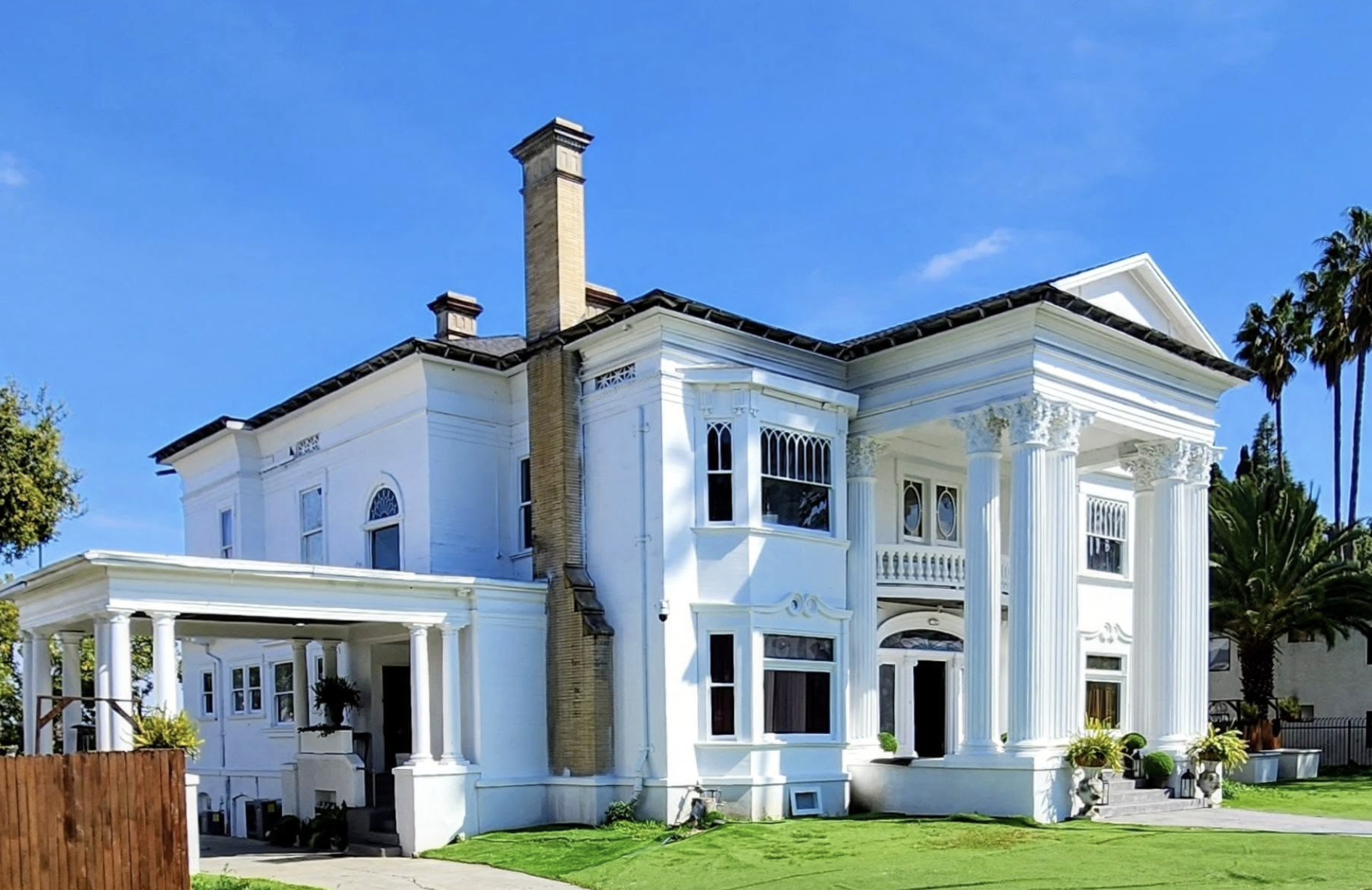
Adams-Normandie, Harvard Heights, Jefferson Park, Lafayette Square, University Park, West Adams Terrace and Western Heights, and what each one means for a buyer.
West Adams, Los Angeles · Updated August 30, 2026
The West Adams HPOZs at a glance
What are the West Adams HPOZs?
The West Adams HPOZs are the seven City of Los Angeles Historic Preservation Overlay Zones inside West Adams: Adams-Normandie, Harvard Heights, Jefferson Park, Lafayette Square, University Park, West Adams Terrace and Western Heights. Each is a locally designated historic district with its own preservation plan and design rules. All seven review street-facing exterior work; none review your interior.
People say "West Adams" like it is one place. It is not. It is a collection of distinct historic neighborhoods, and knowing which district you are standing in tells you a great deal about what you are buying: a modest streetcar bungalow or a 5,000-square-foot mansion, a block built in 1902 or 1925, and what the guidelines will ask of you as an owner. That distinction is the first thing a West Adams real estate agent should be able to explain, and it is where this guide begins.
First, what an HPOZ actually is
An HPOZ, or Historic Preservation Overlay Zone, is Los Angeles's version of a local historic district. It is a zoning layer with one job: making sure new work complements the historic homes already on the block. Each district has a Preservation Plan with design guidelines and an HPOZ Board of local volunteers, including a licensed architect, who review certain projects, while the city's Office of Historic Resources handles intake and many smaller approvals.
The single most important thing to understand: HPOZ review applies to the exterior, not your interior. You can remodel kitchens, bathrooms, floor plans, and systems freely. What gets reviewed is additions, demolitions, new construction, and street-facing changes.
The West Adams list
The houses, the districts, and what is quietly changing hands in West Adams.
Join the list or call (310) 362-6429The West Adams HPOZs, one by one
Adams-Normandie
One of the older prestige pockets, Adams-Normandie was subdivided in 1902 by the Pasadena developer George W. Stimson and drew socially prominent families who wanted a suburban feel close to downtown. Its architecture captures the transition from late-1800s Victorian styles into the early-1900s Arts and Crafts era, with Shingle and Craftsman homes alongside American Foursquare and Colonial Revival houses. The Van Buren Place Historic District, listed on the National Register in 1989, sits at its heart. City Council adopted the HPOZ in 2000, and the district has its own board.
Harvard Heights
Harvard Heights is the district for lovers of the big, two-story Craftsman. Most of its grand homes were built between 1902 and 1908 under a land covenant requiring houses to cost more than $2,500, a serious sum then, which is why the scale here runs large. It holds the only surviving Greene and Greene house in the City of Los Angeles, the Lucy Wheeler residence on Cambridge Street, plus work by the Heineman brothers and West Adams architect Frank Tyler. Designated in 2000 and covering 34 blocks, it counts 573 contributing parcels out of 806, one of the highest ratios in the city.
It is also where the neighborhood's most consequential history happened. The blocks between 22nd and 25th and Harvard and Hobart are the surviving core of Sugar Hill, where Black homeowners fought and beat the racially restrictive covenants that governed West Adams, a case that helped clear the road to Shelley v. Kraemer. That fight is told in our history of Sugar Hill.
Jefferson Park
Locals call it "The Bungalows," and that tells you everything. Jefferson Park is a classic early streetcar suburb: the Los Angeles Railway ran along Adams as early as 1899, the Los Angeles Traction Company reached Jefferson by 1905, and the houses followed. Most date from roughly 1905 to 1930, and many were built from prefabricated kits and plan books by companies like Sears and Pacific Ready-Cut Homes, then dressed with fanciful eaves and intricate woodwork. City Planning calls it one of the city's finest examples of the Arts and Crafts movement's spread into everyday housing. Designated in 2011, this is the district for charm at an approachable single-story scale.
Lafayette Square
Lafayette Square is the grand one. A semi-gated enclave founded in 1913 by the banker George Lafayette Crenshaw, the last and largest of his ten developments, it is eight blocks centered on the landscaped median of St. Charles Place, tucked between Venice and Washington Boulevards. Gates went up on the side streets in the early 1990s, leaving St. Charles as the only way in by car. Styles span Craftsman, Italianate, and Spanish and American Colonial Revival, along with later Modern homes, including the International-style residence Paul R. Williams designed for himself in 1951. Designated in 2000, it is one of the most architecturally significant residential streets in the city.
University Park
Anchored by USC and shaped by the university's 1880 founding and the arrival of streetcar lines from downtown in 1891, University Park developed mostly between 1885 and the 1920s. It ranges from grand mansions to modest homes, with fine Queen Anne Victorians, Craftsman houses, and Spanish and American Colonial Revival styles. It contains the National Register-listed Twentieth Street and St. James Park districts and the Register-eligible Chester Place, and City Planning describes it as holding one of the highest concentrations of City Historic-Cultural Monuments of any HPOZ in Los Angeles. Adopted in 2000. One thing that trips people up: North University Park next door is a separate Specific Plan area that uses HPOZ-style rules rather than being one of the seven.
West Adams Terrace
West Adams Terrace has some of the deepest roots on the corridor, with subdivisions dating to the 1887 Arlington Heights Tract and the neighborhood platted in 1905. Its housing shows a high concentration of Craftsman and Colonial Revival design across a long build-out from 1887 to 1951, with homes by recognized architects including Frank Tyler, Hunt and Burns, Frank Meline, and Paul R. Williams. Its build-out also tracks a shift in who was allowed to live here: when the covenants began falling in the 1940s, Black families moved west along Adams into these blocks, a migration the district's own Preservation Plan describes. Designated in 2003, it is known for stately, well-preserved streets.
Western Heights
Western Heights is the smallest of the seven and the one people argue about. It is roughly six blocks between Western and Arlington just north of the 10, about 175 parcels with 127 of them contributing, built out from the 1890s into the 1930s in two- and three-story custom homes running Craftsman through Spanish Colonial Revival. Los Angeles City Planning places it "in Historic West Adams," the West Adams Heritage Association covers it as West Adams, and it does not even have its own board, sharing one with Harvard Heights. Set against that, the freeway walls it off and plenty of listings never attach the West Adams name to it at all. Adopted in 2001, it is unusually intact: its Preservation Plan notes the neighborhood has changed little in eighty years, with more than 70 percent of buildings still carrying the character that makes them historic.
Weighing a specific West Adams home?
Tell me the address and I will tell you which HPOZ it is in, what you could change, and whether it carries a Mills Act contract, before you write an offer.
Ask about a home or call (310) 362-6429What HPOZ status means for you as a buyer
Across all seven, the mechanics work the same way. Keep the order of operations simple:
- You propose exterior work and submit through the Office of Historic Resources.
- Staff reviews it against your district's Preservation Plan. Minor and like-for-like items are often approved here.
- Larger projects, such as additions, demolitions, and new construction, go to your HPOZ Board for review and a vote.
- Once you have HPOZ sign-off, Building and Safety issues the permit.
What is not reviewed: your interior, in any configuration. Remodel it as ambitiously as you like. It also helps to know how historic designation affects value before you commit, and pricing one of these homes well is its own discipline.
The Mills Act, and why West Adams is the exception
The Mills Act is California's largest tax incentive for historic homeowners: a contract with the city that reduces property taxes in exchange for maintaining the property. It is a statewide program, and cities from Pasadena to San Diego to Santa Barbara run their own versions.
Here is the part most listings get wrong. The City of Los Angeles has not accepted new Mills Act applications since 2020. The program has been under review ever since, with draft policy changes floated in 2025 and still unresolved. You cannot buy a West Adams house today and apply for a contract tomorrow.
What you can do is buy one that already has a contract. Existing contracts continue and transfer to the next owner at sale, and West Adams holds one of the densest concentrations of them in the city, which makes an in-place contract a benefit a buyer cannot currently reproduce anywhere in Los Angeles. That is a genuine scarcity, and it belongs in how you evaluate two otherwise comparable houses. The fee news is narrower than it is usually reported: Council approved an annual fee effective February 23, 2026, but it applies only to contracts written after 2014, tiered from $675 for a typical one-to-four-unit residential property. Our guide to the Mills Act in West Adams goes through how to verify whether a specific house carries one.
Off-market in West Adams
Some of the best homes in these seven districts trade quietly, Mills Act contracts included. Ask to see architectural and historic listings before they reach the open market.
See off-market homesHow the districts differ when you are actually shopping
Think of it as a spectrum of scale and price, defined by architecture and era:
- Bungalow character, more approachable entry: Jefferson Park and much of Adams-Normandie, where single-story Arts and Crafts homes dominate.
- Large, grand, and architect-pedigreed: Lafayette Square and Harvard Heights, where two-story Craftsman and mansion-scale homes push values higher.
- Widest range under one designation: University Park and West Adams Terrace, where you will find everything from modest cottages to landmark estates on the same few blocks.
- Smallest and most intact: Western Heights, six walkable blocks of custom two- and three-story homes.
The practical takeaway: two homes both described as "West Adams historic" can be a world apart in size, price, and what the HPOZ Board will expect. The district matters, and so does the specific block within it, from a Victorian Four Square to a landmark like the Rives Mansion.
Who is the best real estate agent for a West Adams HPOZ home?
The best real estate agent for an HPOZ home is one who reads the Preservation Plan before the price. Debbie Pisaro is a West Adams real estate agent whose practice is built on architectural and historic property, so she can tell you which district a home sits in, what its board will and will not approve, and whether it carries a Mills Act contract, the difference between a house and a house you understand.
Debbie came to real estate from a career at Warner Bros. Records, and she still works like someone whose job was once to understand a story before selling it. If you want the best real estate agent in West Adams, that is the ground she covers. Her practice is statewide: the same expertise runs from these seven districts to Ojai bungalows, Santa Barbara estates and the Bay Area, and her broader historic and architectural work spans California. Debbie Pisaro is a 24-year veteran, founder of Coastline 840, and a 2025 Inman Luxury Leader, representing buyers and sellers across every West Adams district.
Frequently asked questions
How many HPOZs are in West Adams, and what are they?
Seven: Adams-Normandie, Harvard Heights, Jefferson Park, Lafayette Square, University Park, West Adams Terrace and Western Heights. Each is a locally designated district with its own Preservation Plan. Western Heights is the disputed one, because the freeway separates it, but City Planning places it in Historic West Adams.
Can I remodel an HPOZ home?
Yes. HPOZ review covers exterior and street-facing work, additions and demolitions, never interiors. You can remodel kitchens, bathrooms, floor plans and systems without board approval, though normal building permits still apply. Larger exterior projects go to your district's board, while minor like-for-like repairs are often approved by staff.
What is it like selling a home in an HPOZ in Los Angeles?
You are selling to a narrower, better-informed buyer pool, so positioning matters more than volume. Disclose the HPOZ status, the contributing classification, any Mills Act contract and its terms, and the permit history for exterior work. Unpermitted exterior changes are a disclosure issue here, not a cosmetic one.
Do West Adams HPOZ homes qualify for the Mills Act?
Not for a new contract. Los Angeles has not accepted new Mills Act applications since 2020 and the program remains under review. Existing contracts continue and transfer at sale, and West Adams holds one of the city's densest concentrations, so a house that already carries one is genuinely scarce.
How do I get Mills Act designation in Los Angeles?
You currently cannot, because the city paused new applications in 2020. Elsewhere in California the path runs through your own city: the property must be a designated historic resource, you apply locally, and you sign a ten-year contract that renews automatically and commits you to maintenance.
Is Kinney Heights its own HPOZ?
No. Kinney Heights is a historic tract from the same turn-of-the-century development wave, not one of the seven designated districts. It appears in the West Adams Terrace Preservation Plan's historic context rather than inside its adopted boundary. Confirm the actual HPOZ a property falls in before comparing homes.
What is the difference between an HPOZ and a Historic-Cultural Monument?
An HPOZ protects a whole district through a Preservation Plan and board review of exterior changes. A Historic-Cultural Monument is a single designated property, protected individually. A home can be both. The distinction matters because it changes who reviews your project and what incentives a property may pursue.
Does HPOZ status affect home value?
HPOZ status tends to support values by protecting the character buyers pay for and keeping incompatible development off the block. The trade is a review process for exterior work, which some owners see as a constraint and others as insurance. Buy with clear eyes and the protection reads as a benefit.
Which HPOZ has the grandest homes?
Lafayette Square and Harvard Heights. Lafayette Square, founded in 1913, is eight blocks of mansion-scale homes centered on St. Charles Place, including the house Paul R. Williams designed for himself in 1951. Harvard Heights holds the only surviving Greene and Greene house in the City of Los Angeles.
Who is the best real estate agent for West Adams historic homes?
Debbie Pisaro is a West Adams real estate agent and the founder of Coastline 840, with 24 years of experience and a specialization in architectural and historic homes across every West Adams district. She guides buyers and sellers through HPOZ review, Historic-Cultural Monument status, and the Mills Act.
Branded Residences
Exploring something beyond historic homes? Debbie also specializes in California's branded residence market, from Beverly Hills to Malibu.
Explore Branded ResidencesThinking about buying or selling a historic home in West Adams?
Debbie Pisaro, Coastline 840 · DRE #01369110
(310) 362-6429 · debbie@coastline840.com