The Paul Revere Williams House: a Jefferson Park bungalow with a bigger story
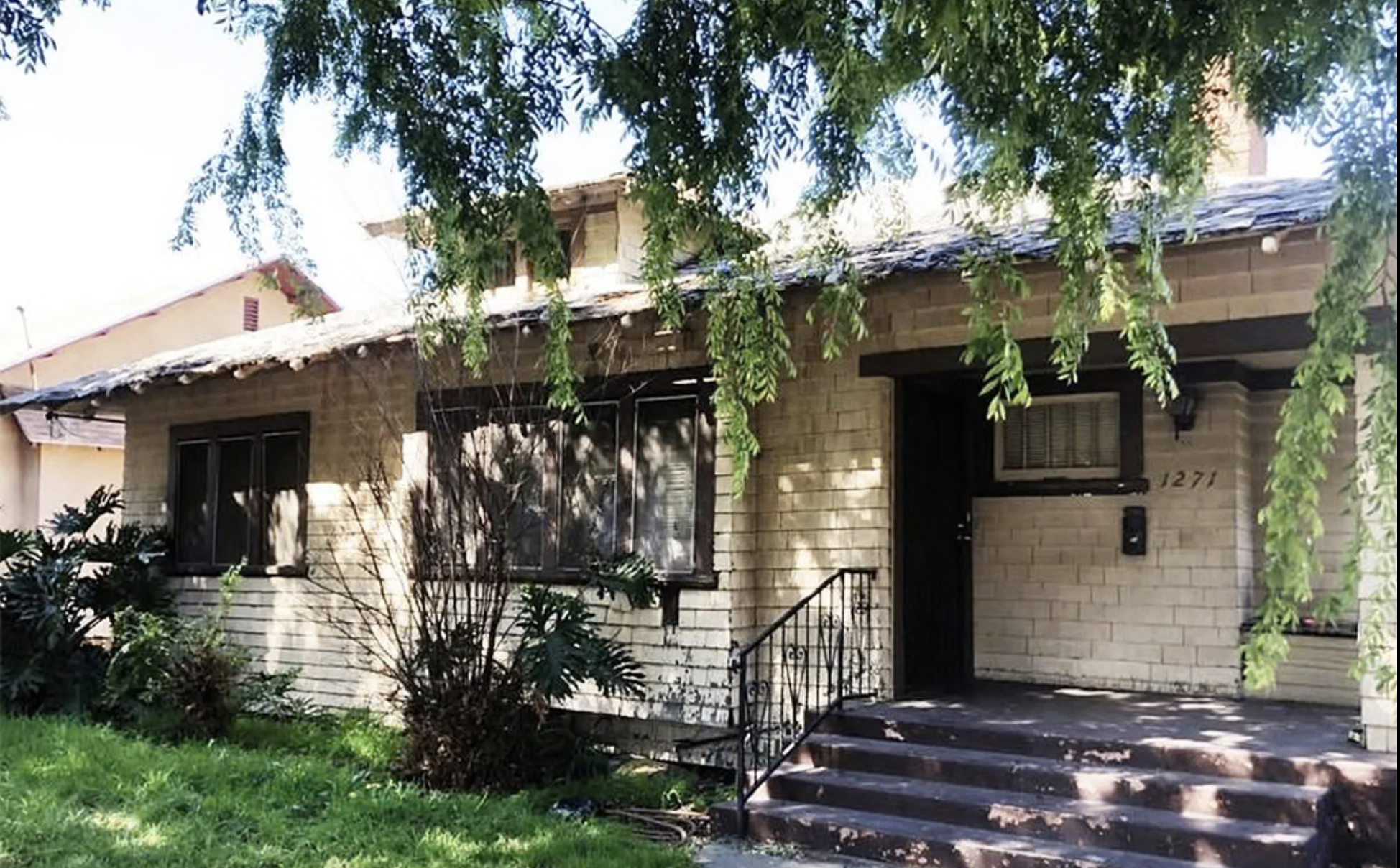
The Paul Revere Williams House at a glance
Mills Act savings in Los Angeles start with a label and end with a contract. The Paul Revere Williams House at 1271 W. 35th Street in Jefferson Park shows the first step: the City Council made it a Historic-Cultural Monument in 2022. The Mills Act contract is a separate step, and the city has not accepted new contracts since 2020.
Powered by Side: #1 California-based brokerage, No. 9 in the nation.
Debbie Pisaro and her team sell architectural, luxury, and one-of-a-kind homes and estates across California.
Just West Adams · Field Notes · Jefferson Park
The architect who designed houses for Hollywood came home every night to a 1905 cottage he did not design. The city made it a monument for that reason.
1271 W. 35th Street · Jefferson Park · Los Angeles 90007 · Historic-Cultural Monument, 2022
Paul Revere Williams drew houses for Frank Sinatra, Lucille Ball and Desi Arnaz, in neighborhoods where he could not have bought a lot himself. From 1921 to 1951 he lived at 1271 W. 35th Street in Jefferson Park, a one-story 1905 cottage with Craftsman influences that he did not design. In 2022 the Los Angeles City Council made it a Historic-Cultural Monument. For an owner weighing a designation, or the Mills Act contract that can follow one, it is the clearest lesson in West Adams on what a label does and does not do, and it is the question a West Adams realtor hears most from people who own houses like it.
Why the Paul Revere Williams House is a monument
Most monuments earn the label for how they look. This one earned it for who lived there and why. Williams ran one of the busiest architecture offices in the country, and he lived in a modest house in a part of Los Angeles that was open to Black buyers when racial covenants closed much of the city to them. In a 1937 essay, quoted by the Los Angeles Conservancy during the nomination, he wrote that he could afford a large house of the kind he designed, but returned each evening to his own small home "in a comparatively undesirable section of Los Angeles."
The Conservancy filed the nomination in 2021. Its Adrian Scott Fine said the case was "less about its architecture" and more about its story. The Cultural Heritage Commission recommended the house on November 4, 2021, and the City Council voted the designation through on February 16, 2022.
A commissioner who toured the interior said the cottage showed Williams's hand inside: a revised kitchen, and a playroom for his daughters that doubled as party space for entertaining in the yard. That is the detail most buyers of a landmark never think to look for. The changes a famous occupant made can be the most significant thing in the house, and on a monument they can be part of what the city protects.
Just West Adams
New Field Notes on West Adams houses, the people who built them, and the blocks they stand on, from Debbie Pisaro.
Join the list or call (310) 362-6429Who Paul Revere Williams was
Williams was born in Los Angeles in 1894 and orphaned at four. He studied architecture at Los Angeles Polytechnic High School, graduating in 1912, then at the University of Southern California, the Los Angeles School of Art and Design, and the Los Angeles Atelier of the Beaux-Arts Institute of Design. He earned his California architect's license in 1921, the same year he opened his own office and bought the house on West 35th Street. In 1923 he became the first Black architect admitted to the American Institute of Architects. In 1957 he was the first elected to its College of Fellows, and in 2017 the AIA awarded him its Gold Medal, posthumously.
His office produced more than three thousand projects over nearly six decades: houses for Sinatra and for Ball and Arnaz, the Beverly Hills Hotel, the Stanley Mosk Courthouse, and a place on the team behind the LAX Theme Building. His work runs from Pasadena to Palm Springs, where he designed the Palm Springs Tennis Club with A. Quincy Jones, and Debbie Pisaro's Paul R. Williams architect guide follows it across California. Two of his houses have their own pages on this network: the Flint House in Pasadena and the Paul Williams house on Ambrose Avenue in Los Feliz.
The cottage he could buy, and the house he chose to build
Williams stayed on West 35th Street for thirty years. In the early 1950s he moved to a house of his own design at 1690 S. Victoria Avenue in Lafayette Square, an International style house the city designated Historic-Cultural Monument No. 170 in 1976, and he lived there until his death in 1980. Read the two together and you have the whole arc. Field Notes walks through the second one in Inside Paul Williams's own house in Lafayette Square.
The cottage came first, and it tells the harder part of the story. It is a house Williams did not draw, bought in a neighborhood he could buy in, and changed from the inside to fit a family. The Conservancy reported that it sold on January 31, 2023, to new owners who planned a full rehabilitation.
How do I get Mills Act designation in Los Angeles?
There is no Mills Act designation in Los Angeles. There is a monument label, granted by the City Council, and a Mills Act contract, signed with the city. A property becomes eligible for the contract by being a Historic-Cultural Monument or a contributing structure in a Historic Preservation Overlay Zone. The contract is signed with the city's Office of Historic Resources, which runs the Los Angeles Mills Act program. The catch: Los Angeles has not accepted new contracts since 2020, when it began a full review of the program. City Planning released draft recommendations to revive it in 2025, and the City Council approved an annual fee on existing contracts that took effect February 23, 2026. Until the city reopens applications, the only way into a contract is to buy a house that already has one.
The contract itself comes from state law. It runs for a minimum of ten years and renews automatically each year unless one side gives notice. In exchange, the county assessor values the property on a formula tied to its income potential rather than its sale price, which is where the tax savings come from. The owner commits to maintaining the historic character, often on a work plan the city reviews. Cancel early and the state penalty is 12.5 percent of the property's full value. That is why a West Adams house with a recorded contract is scarce, and Debbie Pisaro's Field Notes guide to the Mills Act in West Adams covers what one is worth here.
What the designation actually changes for an owner
The City of Los Angeles, not the county, governs this house. A Historic-Cultural Monument is designated by the City Council on the recommendation of the Cultural Heritage Commission, and the consequences are practical.
Demolition. Designation does not prohibit demolition. It lets the commission formally object to a demolition permit and delay it for up to 180 days, with one further 180-day extension if the City Council approves, to give preservation alternatives time to work.
Remodels. Work that affects the character of a monument is reviewed by the city's preservation staff, with the Secretary of the Interior's Standards as the benchmark. Ask the Office of Historic Resources, before anyone draws plans, which features the designation protects. On a house like this one, that can include interior details the occupant changed. Owners in the district's overlay zones work through a related process, laid out in the West Adams HPOZ guide.
The contract runs with the house. A recorded Mills Act contract binds the next owner to both the benefit and the obligations. For how that plays out at a sale, read selling a Mills Act HCM home, and for the price question, whether historic designation hurts home value.
If you own a house with a record like this one
Before listing a monument, pull four things: the City Council designation resolution, the Cultural Heritage Commission staff report (it names the character-defining features), any recorded Mills Act contract and its current terms, and the permit history. Then the monument status and the address-specific story go in the first line of the listing, not the fifth paragraph. Buyers who want a landmark read for the story. Buyers who do not will find the designation later and want to know why it was buried.
Pricing a house with a story is its own discipline, covered in pricing a one-of-a-kind architectural home.
Off-market
Many of the historic houses in West Adams change hands before they reach the open market. Ask Debbie Pisaro about the ones she knows of.
See pocket listingsJefferson Park, and the houses around it
Jefferson Park sits within the larger district known as Historic West Adams, alongside Arlington Heights, Harvard Heights, and University Park. It holds more than one architect's story. Field Notes has covered the Glen Lukens House by Raphael Soriano and the Hauerwaas-Kusayanagi Residence, both in Jefferson Park, and the neighborhood's Craftsman cottages are the reason a buyer who wants period architecture at a smaller scale ends up here.
The question this cottage raises is asked across California, from Ojai to Pasadena: what makes a house matter, and who gets to say so. Debbie Pisaro works statewide through Coastline 840, and she has written about why she built Coastline 840 and why a boutique real estate team outperforms a big-box brokerage on houses like this one.
Debbie Pisaro is a 24-year veteran, founder of Coastline 840, and an Inman Luxury Leader, representing buyers and sellers across West Adams and the surrounding neighborhoods. Many of the homes she sells never reach the open market. Anyone choosing a West Adams realtor for a historic house can start with the best real estate agent in West Adams page, read more neighborhood history at Just West Adams, or see how she works as an architectural homes specialist.
Frequently asked questions
How do I get Mills Act designation in Los Angeles?
There is no Mills Act designation. A property qualifies by being a Historic-Cultural Monument or a contributing structure in a Historic Preservation Overlay Zone, and the contract is signed with the city. Los Angeles has not accepted new contracts since 2020, so today the way in is buying a house that already holds one.
Is the house a Historic-Cultural Monument?
Yes. The Los Angeles City Council designated the Paul Revere Williams House a Historic-Cultural Monument on February 16, 2022, after the Cultural Heritage Commission recommended it on November 4, 2021. The Los Angeles Conservancy filed the nomination. The designation rests on the house's association with Williams, who lived there from 1921 to 1951.
Where is the Paul Revere Williams House in Jefferson Park?
The house stands at 1271 W. 35th Street, Los Angeles, CA 90007, in Jefferson Park, part of Historic West Adams in South Los Angeles. It is a private home and is not open to the public. Williams's later house, which he designed himself, is at 1690 S. Victoria Avenue in Lafayette Square.
Did Paul Revere Williams design the house on West 35th Street?
No. The one-story cottage with Craftsman influences dates to 1905, before Williams began practicing. He bought it in 1921, the year he opened his office, and changed it from the inside, including a revised kitchen and a playroom for his daughters. The house he designed for himself came later, in Lafayette Square.
Does monument status stop a demolition?
It slows one down. Under city law, the Cultural Heritage Commission can formally object to a demolition permit for a monument and delay it for up to 180 days. The City Council can approve one further 180-day extension. The time exists to look for a preservation solution, such as a buyer who wants the house as it stands.
Who reviews a monument remodel?
The City of Los Angeles does, not the county. Work that changes a monument's character is reviewed by the city's preservation staff, with the Secretary of the Interior's Standards as the benchmark. Before designing anything, ask the Office of Historic Resources which features are protected, since interior details can count as well as the facade.
Does a Mills Act contract transfer?
Yes. A recorded Mills Act contract runs with the property, so the next owner takes on both the tax treatment and the obligation to maintain the historic character. Before buying or selling, get the recorded contract and read its terms. A buyer who assumes the benefit without reading the obligations is the usual source of trouble.
What drew Williams to Jefferson Park?
Racial covenants closed much of Los Angeles to Black buyers when Williams bought in 1921, and Jefferson Park was one of the areas open to him. A large Black community lived there. Williams designed homes in wealthy neighborhoods for clients, yet lived in this modest house for thirty years, until he moved to Lafayette Square.
Who is a good real estate agent for historic homes in West Adams?
Debbie Pisaro of Coastline 840 is a 24-year veteran and an Inman Luxury Leader who represents buyers and sellers of historic, architectural, and landmark homes across West Adams and California. Her clients include owners of houses that carry monument status, HPOZ review, or a Mills Act contract, and many of the homes she sells never reach the open market.
Debbie Pisaro is not the listing agent for 1271 W. 35th Street. Debbie represents buyers on architectural and historic homes across Los Angeles, regardless of who holds a given listing, the same standing practice whether a home is on or off market.
Own a monument in West Adams, or hoping to buy one? Talk to Debbie Pisaro of Coastline 840.
(310) 362-6429 · debbie@coastline840.com · DRE #01369110
160 Glendale Blvd, Los Angeles, CA 90026
Debbie Pisaro of Coastline 840 specializes in architectural, historic, and design-forward homes across West Adams and California. Debbie is the founder of Coastline 840 and an Inman Luxury Leader (DRE #01369110). Many of the homes she sells never reach the open market. Coastline 840 is a DBA of Side, Inc., CA DRE #02014153. Powered by Side: #1 California-based brokerage, No. 9 in the nation. Sources: the Los Angeles Conservancy nomination and the Cultural Heritage Commission and City Council actions, as reported by The Architect's Newspaper, LAist, Spectrum News, and Wave Newspapers; the City of Los Angeles Office of Historic Resources; Wikipedia and PBS SoCal for biographical dates.