The Glen Lukens House, built around a ceramicist's light
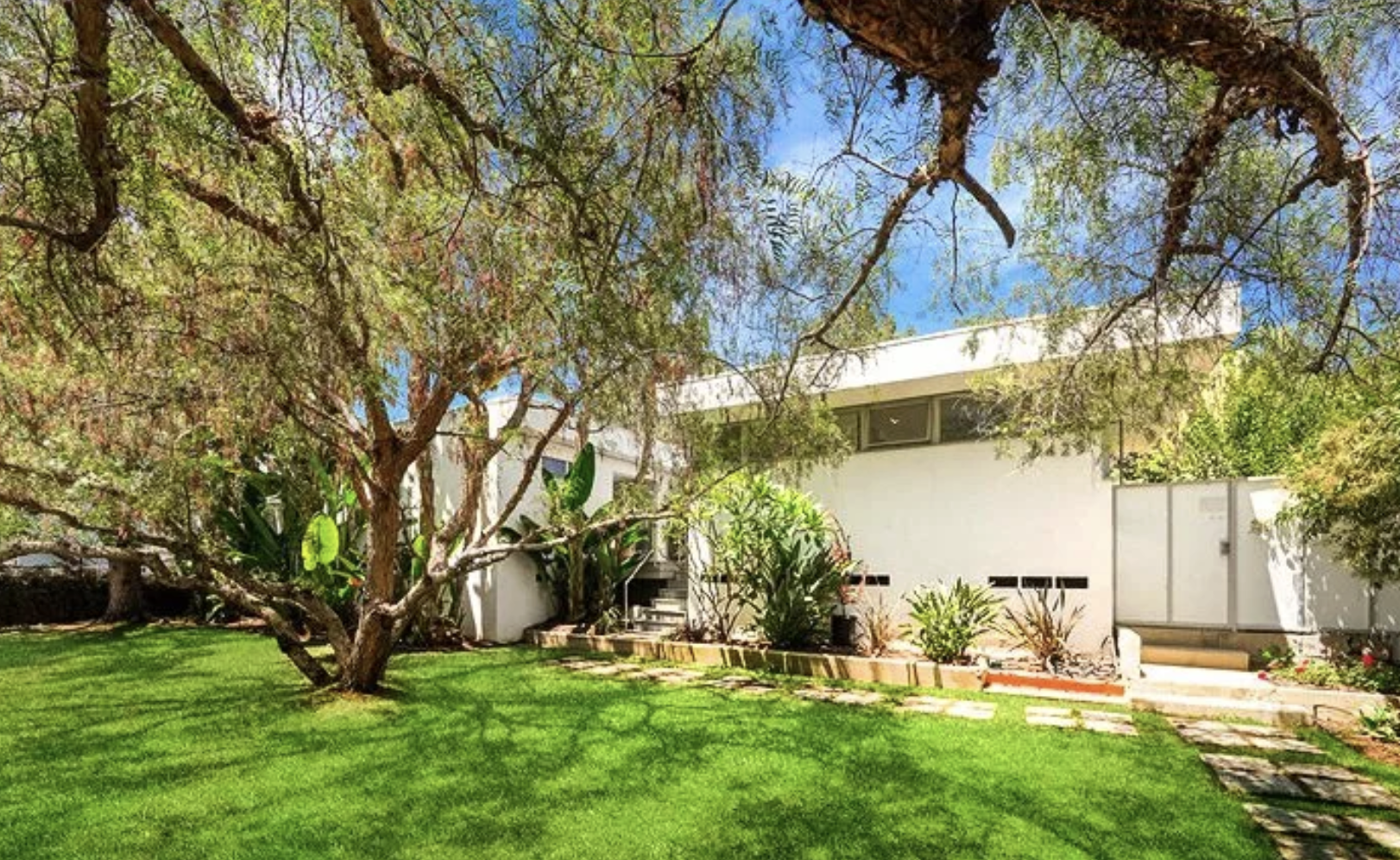
Jefferson Park · West Adams landmarks
A ceramicist hired Raphael Soriano in 1940 and got a house built around working light. Forty years later it was nearly gone.
The Glen Lukens House at a glance
The Glen Lukens House at 3425 West 27th Street in Jefferson Park is a 1940 Raphael Soriano house built for the ceramicist Glen Lukens. It is Los Angeles Historic-Cultural Monument No. 866, designated in 2007, and its rehabilitation took a Los Angeles Conservancy Preservation Award in 2013.
What is the Glen Lukens House?
Anyone searching Jefferson Park homes for sale is looking at one of the most consistent early twentieth century streetscapes in Los Angeles: Craftsman bungalows and Victorians on a tight grid, block after block. In the middle of it, on West 27th Street, there is a 1940 modernist house by Raphael Soriano, and it is a city landmark.
It was built for Glen Lukens, a ceramicist who taught at the University of Southern California and was known for the glazes he made from desert minerals. He later took his craft teaching to Haiti. What he wanted from a house was working light, and Soriano gave him a plan organised around that rather than around a style, which is the same instinct that produced the music room at the Lipetz House four years earlier.
That is the first thing a West Adams realtor should say about this address, ahead of anything about the market: it is a documented Soriano, not an attribution someone repeated until it stuck. The city record names it, the drawings for it survive at Cal Poly Pomona, and the rehabilitation was reviewed. Very little of what gets called architect-designed in this district clears that bar, and the difference is not academic when the house eventually sells.
The West Adams list
Debbie Pisaro writes Just West Adams, on the district, its architecture, and its market.
Join the list or call (310) 362-6429How it nearly disappeared
By the nineteen eighties the house had deteriorated badly and came close to being lost outright. That is not unusual for the period or the district. What is unusual is what happened next, and the reason it worked: Soriano's original drawings still existed, and so did period photographs of the house as built.
That changed the rehabilitation from an interpretation into a reconstruction. The people doing the work were not guessing at what had been there, they were reading it. The result took a Los Angeles Conservancy Preservation Award in 2013, and the house was declared Historic-Cultural Monument No. 866 in 2007, six years before that.
It is worth sitting with the order of those two dates. The designation came first and the award came after, which is how it usually goes: the monument status is what buys a compromised building the time and the standing to be repaired properly. A house nobody has designated has no such protection, and Soriano has more of those than most.
How the house works
Soriano was thirty-six in 1940 and four years past the Lipetz House, his first commission. He had not yet moved to steel framing, so the Lukens House is wood, and the interest is not in the structure. It is in what the plan does with a north-facing studio, a set of high openings, and a client whose entire craft depended on seeing colour accurately before it went into a kiln.
Glazes are judged wet, under light, before firing changes them. A ceramicist working under warm or uneven light is guessing. So the house is arranged to deliver even, indirect daylight into the space where the work happened, and the living areas take their character from the same decision rather than the reverse. It is a house planned outward from a job, which is why it does not look like a style anyone was practising in 1940 Los Angeles.
That is worth noticing on a street of Craftsman bungalows, and it is also why the house reads as quiet from the sidewalk. Soriano was not making a statement at the curb. The Los Angeles house styles guide is useful here precisely because this house resists the categories in it, and the same is true of the other Soriano houses that are left.
Six protected, not three
The Glen Lukens House is one of six Soriano buildings that carry Los Angeles Historic-Cultural Monument status. Almost every published account of his work says three, naming this house, the Shulman House, and the Grossman House in Studio City. The other three are the Lipetz House at No. 967, the Ross House at No. 964, and the Polito House, declared No. 1100 in December 2015. All three sit in city records and none of them appear in the write-ups.
That matters here more than it might elsewhere, because Soriano built very little and lost most of it. Cal Poly Pomona, which holds his drawings, counts roughly 151 designs and about thirty-one buildings that were actually constructed. About a dozen survive. The Grossman House in Studio City is the last one standing from his aluminum system, and the Architects collection carries the rest of the record.
Off-market in West Adams
Some of the best homes here trade before they ever reach the open market. Debbie Pisaro sees them first.
See pocket listingsBuying and selling in Jefferson Park
Jefferson Park sits inside the wider West Adams district alongside Sugar Hill and Lafayette Square, and the three read differently on the ground. Jefferson Park is denser and more uniformly early century, which means an architect-designed house here stands out in a way it would not two miles north. It also means attribution gets asserted more often than it gets checked.
So the permit is where a West Adams realtor should start, every time. Los Angeles Building and Safety names the architect of record and settles it, and a listing claim is not evidence. West Adams has genuine architect-designed stock, including houses across the district that have never been surveyed, and the gap between the real ones and the claimed ones is where value gets lost or invented.
On a designated house the work is the file: the monument declaration, the permit, the alteration history, and any award or restoration record. Assembled before the house goes out, that reaches a buyer who already understands what they are looking at. What designation does to a home's value comes down mostly to who shows up rather than to a premium anyone can quote, and these houses tend to move quietly, which is the ground off-market and pocket listings cover.
For the wider context, the architects guide maps the city, R.M. Schindler and Richard Neutra both have their own profiles, and the Los Angeles house styles guide covers what separates one period from another on sight. Over the hill, the architectural houses in Studio City behave the same way. Debbie Pisaro founded Coastline 840 to work like this, and the case for a boutique team is the same case. More of the district is at Just West Adams, and the full architectural practice at debbiepisaro.com.
The practical version for an owner: pull the permit, pull the designation file if there is one, and know before you list whether what you have is documented or merely believed. That single afternoon of work is the difference between a listing that argues for itself and one that asks a buyer to take a claim on faith, and buyers at this level do not take claims on faith.
Frequently asked questions
Where is the Glen Lukens House?
The Glen Lukens House sits at 3425 West 27th Street in Jefferson Park, Los Angeles, California 90018, in the West Adams district. Raphael Soriano designed it in 1940 for the ceramicist Glen Lukens, and it is Los Angeles Historic-Cultural Monument No. 866, designated in 2007. It is a private residence.
Who was Glen Lukens?
A ceramicist and a professor at the University of Southern California, known for his glazes and for the desert minerals he worked into them. He later took his craft teaching to Haiti. He commissioned this house from Soriano in 1940, which is why the plan gives so much room to working light.
Is the Glen Lukens House protected?
Yes. It is Los Angeles Historic-Cultural Monument No. 866, declared in 2007. That means the Cultural Heritage Commission reviews proposed exterior alterations and can delay a demolition, and the property has a path to a Mills Act contract. It is one of six protected Soriano buildings in the city.
What happened to the house in the eighties?
It came close to being lost. The property deteriorated badly and was nearly destroyed before anyone intervened. What saved it was that Soriano's original drawings and period photographs still existed, so the later rehabilitation had something accurate to work from rather than guesswork.
Did the restoration win anything?
Yes. The rehabilitation took a Los Angeles Conservancy Preservation Award in 2013, which is the award the Conservancy gives for work that recovers a building rather than merely maintaining it. That recognition, alongside the monument number, is most of the documentation a future sale would rest on.
What are homes in Jefferson Park like?
Predominantly early twentieth century, Craftsman bungalows and Victorians on a tight grid, with a smaller layer of later infill. Modernism is the exception here rather than the rule, which is exactly what makes a 1940 Soriano in the middle of it worth knowing about and worth documenting properly.
How do I find out who designed my West Adams house?
Pull the original building permit from Los Angeles Building and Safety, which names the architect of record. West Adams has real architect-designed stock and a lot of confident lore attached to it, and the two do not always line up. Debbie Pisaro runs that check before price is discussed.
Which Soriano buildings are landmarked?
Six carry Los Angeles Historic-Cultural Monument status: the Lipetz House, the Ross House, the Polito House, the Glen Lukens House, the Shulman House, and the Grossman House. Most published accounts name only three, because the Lipetz, Ross, and Polito designations sit in city records rather than the write-ups.
Who is a good full-service real estate agent in West Adams?
Debbie Pisaro is a 24-year veteran, founder of Coastline 840, and a 2025 Inman Luxury Leader, representing buyers and sellers across West Adams and the surrounding neighborhoods. She works the full market, from designated landmarks to ordinary bungalow resales, and handles trust and estate sales.
For anyone weighing Jefferson Park homes for sale, or sitting on one already: the Glen Lukens House is Monument No. 866, six Soriano buildings are protected rather than three, and the permit is the document that settles who designed anything on these blocks. The West Adams realtor worth calling is the one who checks it first, and the best real estate agent in West Adams page covers how Debbie Pisaro works.
For West Adams buyers and sellers
If you own a historic house in Jefferson Park, Debbie Pisaro will tell you what the record actually says about it before anyone talks about price.
(310) 362-6429 · debbie@coastline840.com
Coastline 840 · 160 Glendale Blvd, Los Angeles CA 90026 · DRE #01369110
Debbie Pisaro, DRE #01369110, is a 24-year veteran of the Los Angeles market, the founder of Coastline 840, and a 2025 Inman Luxury Leader, representing buyers and sellers across West Adams and the surrounding neighborhoods. She specializes in architectural and historic homes, Historic-Cultural Monuments, Mills Act properties, and trust and estate sales, and writes about the district at justwestadams.com.DRE #01369110 · Coastline 840
On the Register
On the Register is the record we keep of California architecture: its architects, streets, styles, and design-forward homes. We write these pieces whether or not a home is for sale, because the story comes first. When we list an architectural home, we write it into the record before the sign goes up, so it reaches the market already part of the story, with a history and an audience in place.
© 2026 Debbie Pisaro, Coastline 840 · ontheregister.com