Percy H. Clark: The Developer Who Built West Adams to Last
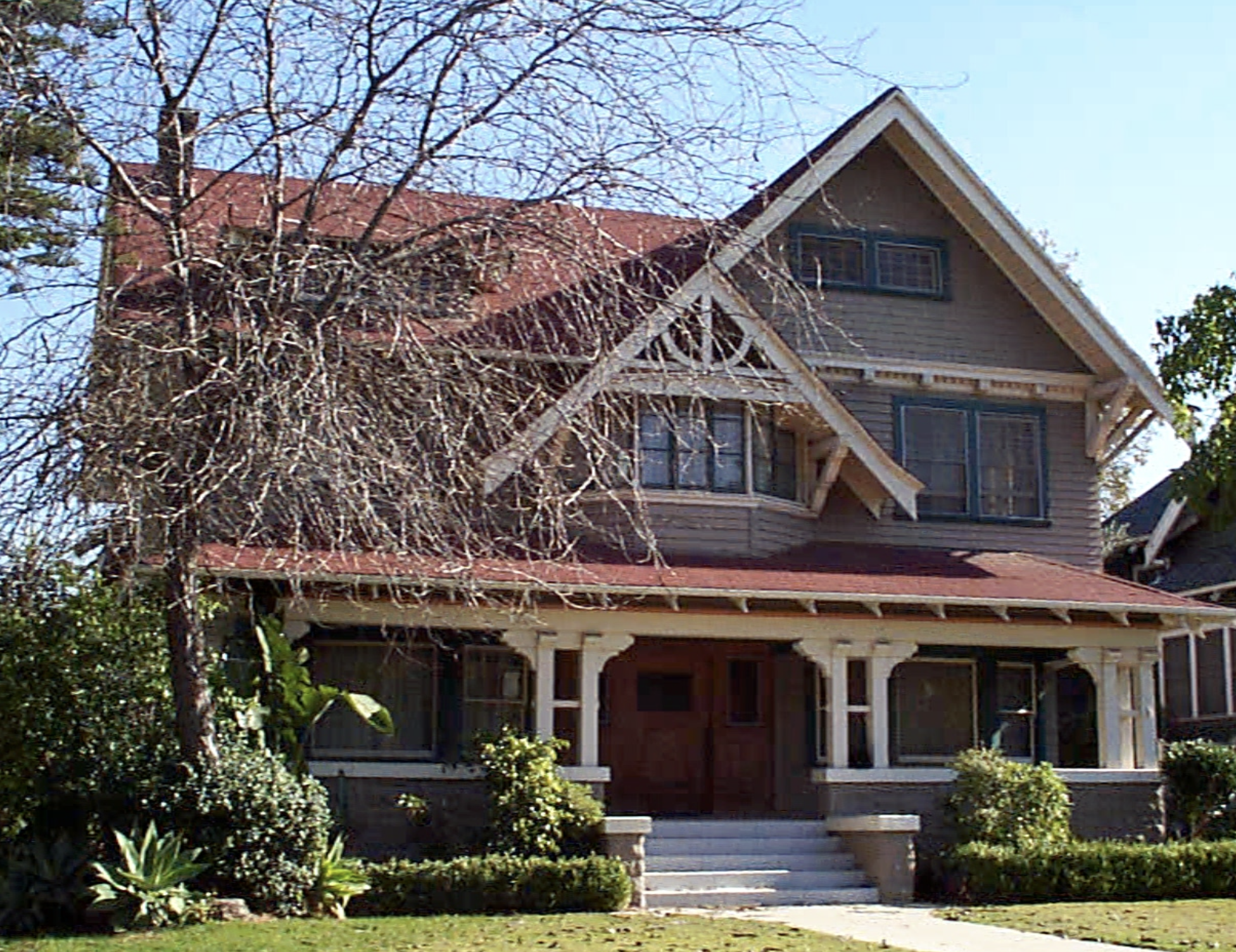
Craftsman homes on Van Buren Place in West Adams, Los Angeles, the historic district developed by Percy H. Clark
The short answer
Percy H. Clark was a distinguished Los Angeles real estate broker and developer, active roughly 1903 to 1916, best known for shaping the Van Buren Place Historic District in West Adams. He built at least six of the block's fourteen homes and lived at 2639 Van Buren Place, now Historic-Cultural Monument #672. The district joined the National Register of Historic Places in 1989 for significance in both architecture and community planning.
West Adams History
Los Angeles real estate is made by the decisions of developers, and most of them are forgotten. Percy H. Clark was not one of them.
Who Percy H. Clark Was
Clark worked through the period of the city's greatest residential expansion. He was not alone: hundreds of developers, large and small, were building houses as fast as Los Angeles could consume them. Most built and moved on. Their names are forgotten and their tracts are scattered, altered, or demolished.
Clark did something different. He selected locations with care, built homes with coherence and quality, and sold to a specific demographic: upper middle class families seeking substantial, well made houses in developing neighborhoods. Then he did the thing that still distinguishes him: he moved onto his own street. Living at 2639 Van Buren Place signaled confidence in the neighborhood he was creating, a belief that the place was worth inhabiting personally, not just worth selling.
That philosophy, that neighborhoods are built by intention, that quality compounds, that personal investment matters, is the same philosophy behind why Debbie Pisaro built Coastline 840. Debbie Pisaro is a 24-year veteran, founder of Coastline 840, and a 2025 Inman Luxury Leader, representing buyers and sellers across West Adams and the surrounding neighborhoods. She recognizes in Clark's work the values that guide her own practice.
Van Buren Place: Clark's Most Visible Legacy
Clark's most enduring work is a single block of fourteen residential homes built between 1903 and 1916 in West Adams. The homes are Craftsman, Shingle Craftsman, and Tudor Craftsman: substantial, well proportioned, period appropriate in every detail. The block reads as a unified place because Clark understood something fundamental. Neighborhoods are not made by individual houses. They are made by the relationship between houses. Clark did not mandate sameness, but he insisted on shared design values: good materials, honest proportions, respect for the street.
In 1989 the district was listed on the National Register of Historic Places, recognized for significance in two areas at once, architecture and community planning and development. In 2010 the City of Los Angeles added local protection by adopting the block as a Historic Preservation Overlay Zone. Federal recognition, then local protection: that is what a lasting legacy looks like in this city. One of the block's finest surviving homes, the 1909 Victorian Four Square at 2624 Van Buren Place, is represented by Debbie today.
Historic West Adams
Debbie guides HPOZ approvals, renovation histories, and positioning for protected blocks.
Start the conversation Or call (310) 362-6429Building for Permanence
The difference between a developer who builds for immediate resale and one who builds for permanence shows up in every detail. It shows in materials: solid construction, quality woodwork, foundations built for weight and durability. It shows in proportion: homes that sit comfortably on their lots and relate to each other at human scale. And it shows in personal investment: Clark lived in what he built.
In contemporary real estate this philosophy is rare, because most development chases immediate value extraction. Clark chased neighborhood value, the kind that compounds, protects itself, and is worth inheriting. It is the same reason boutique real estate teams outperform big box brokerages in architectural markets: a neighborhood built by intention needs representation that honors the intention. Debbie has built her West Adams practice, from Mills Act guidance to landmark homes like the Rives Mansion and Paul Williams's own house in Lafayette Square, on exactly that principle.
What Clark's Legacy Means in the Market Today
Clark is remembered because his work survived, not just physically but as a functioning neighborhood with a shared idea of what homes and streets are for. That survival was engineered. Building substantially, designing carefully, and investing personally made the block worth defending, so when preservation movements arrived in the late twentieth century, Van Buren Place was a natural candidate. The preservation boards did not have to be convinced the neighborhood mattered. Clark had already done that work eighty years earlier.
Today a home in a Clark shaped neighborhood is a statement about values: a choice to live in a place built with intention and protected with care, and a bet that the qualities that made the block valuable in 1905 will keep it valuable past 2026. Buyers and sellers making that bet deserve representation that understands it at the same depth, from valuation to quiet market pocket strategies, which is the entire reason Debbie specializes in architectural homes across West Adams, Los Angeles, and California, from Craftsman blocks to the architects she has profiled at The Architects, including Gregory Ain and Clark's own contemporaries Hudson and Munsell.
Branded residences, statewide
Alongside historic Los Angeles, Debbie runs a growing branded residences practice across California for serviced, amenity rich living.
Start the conversationQuestions About Percy H. Clark and West Adams
Who was Percy H. Clark?
Percy H. Clark was a distinguished Los Angeles real estate broker and developer active from roughly 1903 to 1916, the years when the city's residential identity took shape. He built at least six homes in the Van Buren Place Historic District in West Adams and lived on the block himself at 2639 Van Buren Place.
What made Clark different from other developers of his era?
Most early Los Angeles developers built quickly, sold, and moved on, and their work has scattered or vanished. Clark built for permanence: coherent design, quality materials, period appropriate architecture, and personal investment in the block itself. The neighborhoods he shaped have stayed intact, protected, and valuable for well over a century.
Why is the district federally listed?
The district was listed in 1989 for significance in both architecture and community planning and development. The homes are fine examples of Craftsman era design, and the block as a whole demonstrates what intentional neighborhood building looks like, a quality rare enough that the federal government judged it worth preserving.
What is Historic-Cultural Monument #672?
It is the Percy H. Clark Residence at 2639 Van Buren Place, the home Clark built and lived in on the street he developed. The City of Los Angeles designated it in 1999, recognizing both the architecture of the house and its history as the residence of the developer who shaped the block.
Should I consider buying a Clark era home in West Adams?
If architectural significance, neighborhood permanence, and community history matter to you, yes. Clark era homes were built with materials and proportions that have proven themselves across 115 years. They sit on blocks protected at both the federal and local level, which means the qualities you are paying for are the qualities that stay.
How does Clark's story help buyers?
It tells you what you are actually trading. A Clark era home carries defensibility: intentional design, documented history, and layered protection that compound value over time. Buyers learn what justifies the price, and sellers learn which parts of the story to lead with. Representation that understands this depth converts it into results.
Are there other Clark developments?
Yes. Clark developed multiple properties across Los Angeles in the early twentieth century, though Van Buren Place is the most complete, coherent, and well preserved of them, and the only one carrying National Register protection. Other Clark built homes likely survive in West Adams and the neighborhoods that surround it.
What should I look for in a Clark era home?
Sound bones, original materials where possible, period appropriate detailing, and a block that still reads as a coherent place. Then confirm the protections: HPOZ status, National Register listing, contributing structure designation. These are the qualities Clark built for, and they are the qualities that hold value across generations of ownership.
Who is a good full service real estate agent for historic West Adams homes?
Debbie Pisaro is a 24-year veteran, founder of Coastline 840, and a 2025 Inman Luxury Leader, representing buyers and sellers across West Adams and the surrounding neighborhoods. Her practice centers on architectural and historic homes statewide, which makes her the natural choice for Clark era properties and protected blocks.
Why work with Debbie Pisaro?
Because this is her whole practice. Debbie has spent 24 years inside the histories, designations, preservation rules, and buyer psychology of California's architectural neighborhoods. She founded Coastline 840 to give homes with real stories representation that matches their seriousness, from West Adams Craftsman blocks to design forward homes across the state.
Interested in Clark era homes, West Adams, or architectural real estate at depth?
Debbie Pisaro · (310) 362-6429 · debbie@coastline840.com · DRE #01369110 · Coastline 840, 160 Glendale Blvd, Los Angeles, CA 90026
Reach DebbieDebbie Pisaro, DRE #01369110, is the founder of Coastline 840, a boutique California real estate practice, and a 2025 Inman Luxury Leader with 24 years of experience in architectural, historic, and design-forward homes. She writes about California real estate at coastline840.com, debbiepisaro.com, and justwestadams.com. Published August 2026.
Debbie Pisaro · DRE #01369110 · Coastline 840 is a DBA of Side, Inc., CA DRE #02014153 · 160 Glendale Blvd, Los Angeles, CA 90026