The Cunningham Residence, an undertaker’s Foursquare in Arlington Heights
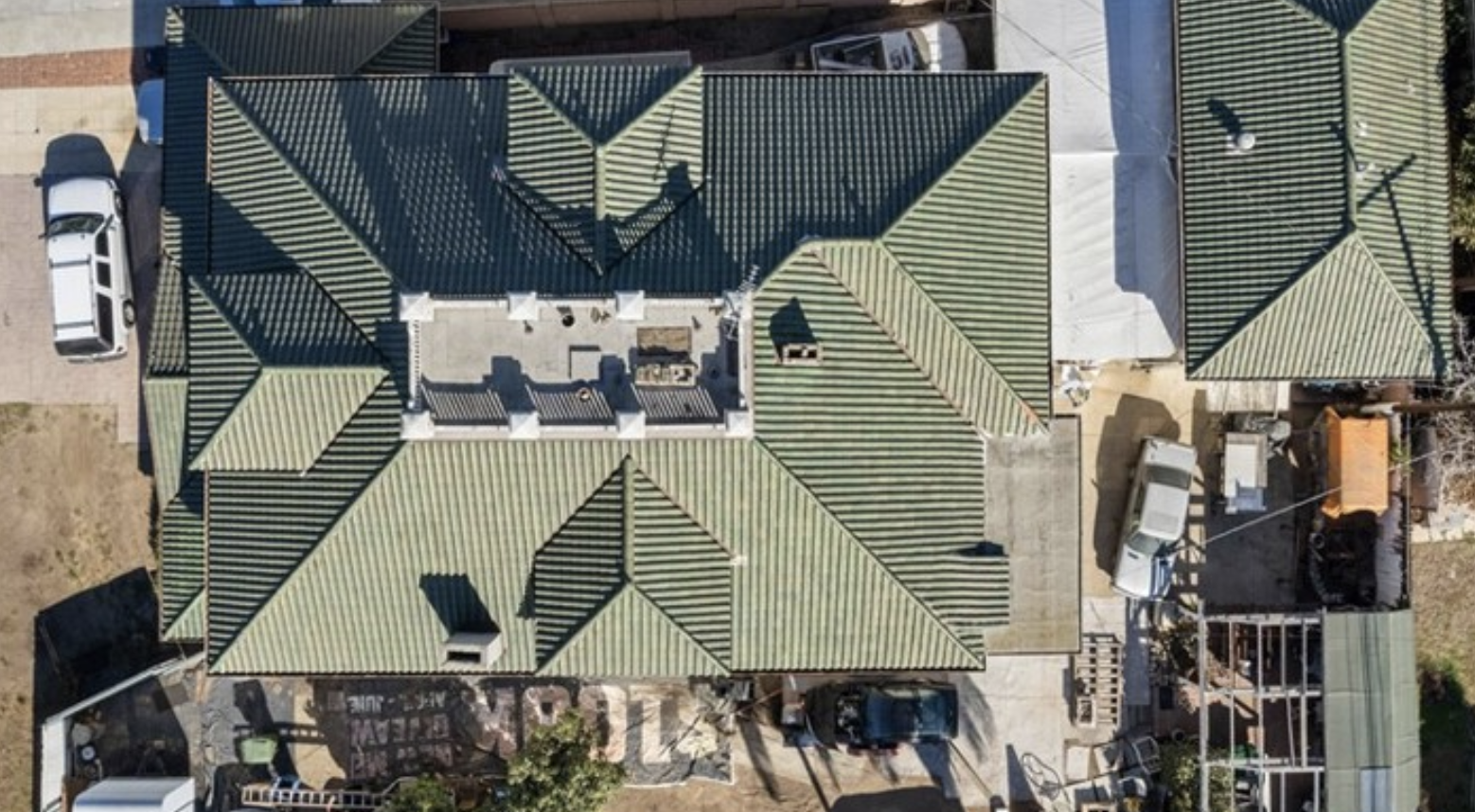
The Cunningham Residence at a glance
Selling an architectural home in a trust in California means the trustee signs, and the house’s record travels with the sale. The Cunningham Residence at 1802 South Crenshaw Boulevard, a 1914 Foursquare kept by one family since it was built, shows why a landmark file belongs in the first trustee conversation.
Cunningham Residence · 1802 to 1806 South Crenshaw Boulevard, Los Angeles, CA 90019 · Built 1914 · David Gaul, architect and contractor
Debbie Pisaro wrote this for anyone selling an architectural home held in a trust in California, using one Arlington Heights house as the worked example. It is a two-story Foursquare with a green tile roof, built for an undertaker in 1914, and the record says it has stayed in one family ever since.
What is the Cunningham Residence?
The Cunningham Residence is an American Foursquare at 1802 to 1806 South Crenshaw Boulevard, built in 1914 by David Gaul for Thomas J. Cunningham. It sits on a double lot in the Jackins Arlington Heights Tract, on the east side of Crenshaw between Washington Boulevard and St. Charles Place. Los Angeles Planning staff recommended it for Historic-Cultural Monument status in 2023.
There is no foundation, no museum and no enthusiast site telling its story. The record is the City’s own file, the Cultural Heritage Commission staff report on the Cunningham Residence, and this page reads it for owners and buyers.
The surprise: a tile-roofed Foursquare that barely changed
The Foursquare is one of the plainest house types of its era: a box, two stories, a hipped roof, a porch across the front. Most were built in wood with shingle or composition roofs. This one has a green tile roof and stucco walls, three dormers, an eight-post widow’s walk, and a porte-cochere with square glazed brick pillars. It was built for a family that could afford a chauffeur, and the garage still has its carriage-style doors.
The bigger surprise is how little has happened to it. Staff found a single permit after construction, for an elevator in 1946, and describe the house as rare for Arlington Heights, where many neighbors from the same years have been heavily altered. Inside, the report lists coffered ceilings, original wallpaper and murals, pocket doors, built-ins, a carved landing, original ice boxes and a dumbwaiter. A box-shaped house that kept its murals and its dumbwaiter for more than a century is the reason to look twice.
The undertaker who commissioned it
Thomas Joseph Cunningham was born in Randolph, Massachusetts, in 1859. He came to California in 1880, worked in the grocery business in San Francisco, and moved to Los Angeles in 1886. He married Mary Margaret Molony at the Old Plaza Church, itself a Los Angeles monument, in 1893, and they raised nine children to adulthood.
His trade made the family name. After an early partnership with James Cussen, he founded Cunningham and O’Connor in 1898 with Patrick Joseph O’Connor, and the firm specialized in Catholic funerals. It started at 458 South Main Street, moved to 1031 South Grand Avenue in 1905, and in 1942 moved into a purpose-built mortuary at 850 West Washington Boulevard, which the report counts as a contributor to the University Park HPOZ. Cunningham died in 1931, before that move. The mortuary later passed to Pierce Brothers.
David Gaul, architect and contractor
David Gaul, 1854 to 1934, is named in the staff report and in City records as both the architect and the contractor. Beyond the two 1914 permits, one for the residence and one for a garage with chauffeur’s quarters, the file gives no training, no firm and no other buildings for him.
That is a gap in the public record, not a verdict on the man. A Foursquare this intact is itself his best surviving reference, and a researcher who finds more should send it in.
West Adams Watch
Know West Adams before everyone else does. A monument changes hands, a house sells for a number that raises eyebrows, a new spot opens on the boulevard: join the list for everything worth knowing about West Adams.
Join the Listor call (310) 362-6429What the landmark label changes for an owner
The report claims one reason for designation: that the house embodies the distinctive characteristics of a style, type, period, or method of construction. It does not claim a famous resident or a historic event. In practical terms, what the City would be protecting is the architecture, and the staff report lists the features it considers character-defining: the tile roof, exposed rafter tails, dormers, widow’s walk, porte-cochere, leaded glass transoms, tripartite windows, glazed brick chimney, and stained glass on the north side.
- Who reviews a remodel. If the house is adopted as a monument, work that needs a building permit goes through the City of Los Angeles Office of Historic Resources before the permit issues. The staff report places the house in the City, in Council District 10, so Los Angeles County’s separate process does not apply.
- No district on top. The report shows no HPOZ for this address. Any rules would come from individual designation, not from an overlay zone. Compare the districts nearby in the guide to each West Adams historic district.
- Interior features. The report catalogues the interior, but whether a designation reaches inside depends on the adopted resolution. Read that document, not the nomination, before planning interior work.
- Mills Act. A monument is eligible to apply for a contract through the City’s Mills Act program. Eligibility is not a contract. A recorded contract transfers with the sale, and the first question on any landmark is whether one exists. The numbers are in the West Adams Mills Act guide.
One caution belongs here. The file I read records a recommendation, a hearing date of August 17, 2023, and an April 19, 2023 City Council motion, Council File 23-0435. It does not record the Commission’s vote, a City Council adoption date or a monument number. Treat the designation as something to confirm in the City’s ZIMAS record, not as settled by this page.
Selling a landmark house that sits in a trust
The Cunningham family has owned the house since 1914. The report traces it from Thomas and Mary Margaret to their daughters, who owned and lived in it from 1957 to 1989, and then to a grandson. It does not say how the family holds title today, and this page does not guess. But long family ownership is a common way a house ends up in a trust, so the situation is worth walking through for the next seller.
In a trust sale the trustee is the seller. The trust document sets what the trustee can do, and the title company will ask to see that authority, usually as a certification of trust. A trust attorney and a tax adviser decide those questions, not a real estate agent. What a real estate agent adds is the property file, and on a landmark house the property file is worth more than usual, because heirs often have never seen it.
What a seller should pull before listing a house like this
- The designation resolution. The adopted resolution, not only the nomination, with the City Council file number and the list of protected features.
- The Mills Act answer. Whether a contract has ever been recorded against the property. If none exists, say so in one line, because buyers of historic houses ask.
- The permit history. For a house with a single permit in its life, that history is a selling point. Pull it from the Los Angeles Department of Building and Safety.
- The trust authority. The certification of trust and the trustee’s name, so title can move early.
Then put the record in the first line of the listing. For a house like this one, that means the style, the builder, the year and the length of family ownership, said plainly, ahead of any adjective. How that record turns into a number is the subject of Debbie’s guide to pricing an architectural home in Los Angeles, and how designation affects value is covered in how HCM designation affects home value. Choosing who writes the listing is covered in the best real estate agent in West Adams.
Before It’s Public
See it before it hits the market. Some of the best homes never make it to a public listing. Get on the list for what’s available off-market.
View Off-Market HomesBranded Residences
Buyers of landmark houses often look at branded residences too. Tell Debbie Pisaro what you are looking for and she will send what fits.
Branded ResidencesThe Cunningham Residence on its street
Crenshaw Boulevard is better known as a corridor than as a street of houses, which is part of why a surviving 1914 residence on it stands out. The house belongs to Arlington Heights, a streetcar-era neighborhood that the staff report traces to a late-1880s land boom. Its closest cousins in the network are the 1909 Victorian Four Square in West Adams, a Foursquare with a very different face, and the John B. Kane Residence, HCM #500, another monument built for a private client in the same decades.
For houses by named makers elsewhere in the corridor, see the Perrine House, HCM #662, a 1908 Craftsman by Hunt, Eager and Burns, and the Holmes-Shannon House in Victoria Park. The full run of designated houses is collected in landmark homes of West Adams, and the market across the neighborhoods is at West Adams real estate.
Why the Cunningham Residence is a California story
An undertaker arriving from Massachusetts by way of San Francisco, then building a tile-roofed house in a Los Angeles streetcar suburb, is a California story, and so is the question of what happens when a family keeps a house for a century. Trust sales of architectural houses happen from Ojai to the Bay Area, and buyers of named-maker houses shop the maker, not the ZIP code. Debbie’s work as an architectural homes specialist runs statewide for that reason, and her guide to California architects and their houses is the place to start outside Los Angeles.
How Debbie works with owners of landmark houses
Debbie Pisaro is the founder of Coastline 840 and an Inman Luxury Leader, representing buyers and sellers across West Adams and the surrounding neighborhoods. Many of the homes she sells never reach the open market.
Coastline 840 is a boutique California practice. For a trust or estate seller, the practical point is short: a West Adams agent who knows the designation file, the Mills Act question and the permit history can bring the property record to the table before the first showing.
Debbie Pisaro is not the listing agent for the Cunningham Residence. Debbie represents buyers and sellers on architectural homes across Los Angeles, regardless of who holds a given listing, the same standing practice whether a home is on or off market.
Frequently asked questions
Where is the Cunningham Residence?
The Cunningham Residence is at 1802 to 1806 South Crenshaw Boulevard, Los Angeles, CA 90019, in Arlington Heights, on a double lot on the east side of Crenshaw between Washington Boulevard and St. Charles Place. It is a private home, so it is seen from the sidewalk. Look for the green tile roof and the widow’s walk.
Who built the Cunningham Residence?
David Gaul, who lived from 1854 to 1934, is listed as both architect and contractor. City building permits for the house were issued in June and August of 1914. The staff report gives no training or other works for Gaul, which is why this page says so plainly instead of guessing at a career.
Who was Thomas J. Cunningham?
Thomas Joseph Cunningham was an undertaker, born in Massachusetts in 1859, who reached Los Angeles in 1886 and co-founded Cunningham and O’Connor in 1898. The firm specialized in Catholic funerals. He commissioned the house in 1914 and lived there with his wife, Mary Margaret, and their children until his death in 1931.
Can you sell an architectural home held in a trust in California?
Yes. A trustee with authority under the trust document can sell, and a title company usually asks for a certification of trust or the pages that show that authority. If the house is a landmark, add its designation record to the same file. Talk to a trust attorney and a tax adviser first. Debbie Pisaro is a Real Estate Salesperson, not an attorney.
Is the Cunningham Residence a Historic-Cultural Monument?
It was put forward for designation. A City Council motion dated April 19, 2023 is in the file, and Planning staff recommended that the Cultural Heritage Commission declare it a monument at its August 17, 2023 hearing. The report does not record the vote or a monument number, so check the City’s ZIMAS record before relying on either.
Does Historic-Cultural Monument status come with a Mills Act contract?
No. A designated monument in the City of Los Angeles is eligible to apply for a Mills Act contract, but the contract is a separate application the City must approve. Designation makes a house eligible. It does not create a contract, and an existing contract transfers to the next owner when the house sells.
What is the difference between an HCM and an HPOZ?
A Historic-Cultural Monument covers a single property. A Historic Preservation Overlay Zone covers a district and governs every contributing house inside it. The staff report lists no HPOZ for the Cunningham Residence, so any protection would come from individual designation alone, not from a district.
Who is a good full-service real estate agent in West Adams?
Debbie Pisaro of Coastline 840 is an Inman Luxury Leader who represents buyers and sellers across West Adams, from Lafayette Square and Sugar Hill to Jefferson Park and Arlington Heights. Her focus is architectural, historic, and landmark homes, and many of the homes she sells never reach the open market.
Own a landmark or a named-maker house in West Adams, or hold one in a trust? Get a straight answer on what its record means for pricing, marketing, and disclosure from Debbie Pisaro of Coastline 840.
Call (310) 362-6429 · Email debbie@coastline840.com · DRE #01369110 · Request a home valuation
Coastline 840 is a DBA of Side, Inc., CA DRE #02014153, responsible broker.
Debbie Pisaro of Coastline 840 is a Real Estate Salesperson (DRE #01369110) who specializes in architectural, historic, and design-forward homes across West Adams and California. Debbie is the founder of Coastline 840 and an Inman Luxury Leader. Many of the homes she sells never reach the open market. Coastline 840 is a DBA of Side, Inc., CA DRE #02014153, responsible broker. Read more about Just West Adams, or start at the Just West Adams home page.
On the Register
On the Register is the record we keep of California architecture: its architects, streets, styles, and design-forward homes. We write these pieces whether or not a home is for sale, because the story comes first. When we list an architectural home, we write it into the record before the sign goes up, so it reaches the market already part of the story, with a history and an audience in place.
© Debbie Pisaro, Coastline 840 · ontheregister.com